Back to countries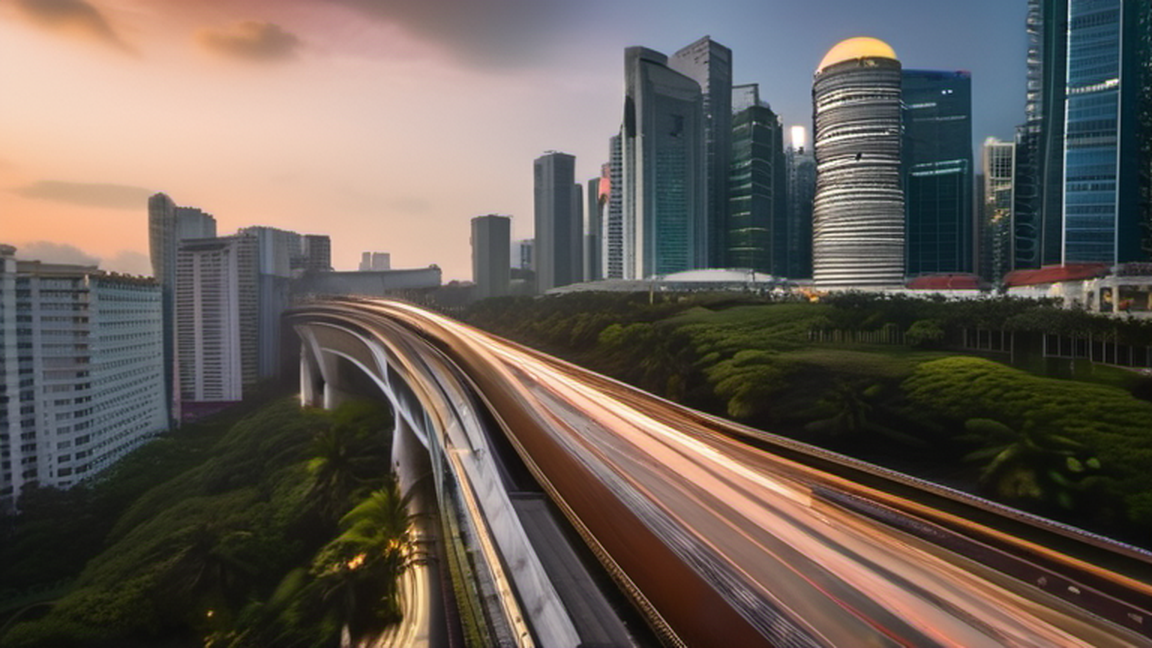
countries
Singapore
Singapore
Singapore, officially the Republic of Singapore, is an island country and city-state in Southeast Asia. Its territory comprises a main island, over 60 satellite islands and islets, and one outlying islet. The country is about one degree of latitude (137 kilometres or 85 miles) north of the equator, off the southern tip of the Malay Peninsula, bordering the Strait of Malacca to the west, the Singapore Strait to the south along with the Riau Islands in Indonesia, the South China Sea to the east and the Straits of Johor along with the State of Johor in Malaysia to the north. In its early history, Singapore was a maritime emporium known as Temasek; subsequently, it was a major constituent of several successive thalassocratic empires. Its contemporary era began in 1819, when Stamford Raffles established Singapore as an entrepôt trading post of the British Empire. In 1867, Singapore came under direct British control as part of the Straits Settlements. During World War II, Singapore was occupied by Japan in 1942 and returned to Britain as a Crown colony following Japan's surrender in 1945. Singapore gained self-governance in 1959 and in 1963 became part of the new federation of Malaysia, alongside Malaya, North Borneo and Sarawak. Ideological differences led to Singapore's expulsion from the federation two years later; it became an independent sovereign country in 1965. After early years of turbulence and despite lacking natural resources and a hinterland, the nation rapidly developed to become one of the Four Asian Tigers. As a highly developed country, Singapore has the highest PPP-adjusted GDP per capita in the world and is the only country in Asia with a AAA sovereign credit rating from all major rating agencies. Identified as a tax haven, it is a major aviation, financial and maritime shipping hub and has consistently been ranked as one of the most expensive cities for expatriates and foreign workers. Singapore ranks highly in key social indicators: education, healthcare, housing, peacefulness, passport strength, personal safety and infrastructure, with a high home-ownership rate. Singaporeans enjoy one of the longest life expectancies, fastest Internet connection speeds, lowest infant mortality rates and lowest levels of corruption in the world. Singapore is organised into five regions, 55 planning areas and hundreds of subzones. It has the second highest population density of any country, although there are numerous green and recreational spaces as a result of urban planning. With a multicultural population and in recognition of the cultural identities of the country's major ethnic groups, Singapore has four official languages: English, Malay, Mandarin and Tamil. English is the common language, with exclusive use in numerous public services. Multi-racialism is enshrined in the constitution and continues to shape national policies. Singapore is a parliamentary republic and its legal system is based on common law. While it is constitutionally a multi-party democracy where free elections are regularly held, it functions as a de facto one-party state, with the People's Action Party (PAP) maintaining continuous political dominance since 1959. The PAP's longstanding control has resulted in limited political pluralism and a highly centralised governance structure over national institutions. One of the five founding members of ASEAN, Singapore is also the headquarters of the Asia-Pacific Economic Cooperation Secretariat, the Pacific Economic Cooperation Council Secretariat and is the host city of many international conferences and events. Singapore is also a member of the United Nations, the World Trade Organization, the East Asia Summit, the Non-Aligned Movement and the Commonwealth of Nations.
Rank
201
Coordinates
1.37, 103.80
Source
WBP almanac
Nearby in Singapore
Afghanistan
Afghanistan
Afghanistan is a landlocked country at the crossroads of Central and South Asia. The country shares borders with Uzbekistan, Turkmenistan, Tajikistan, Iran, Pakistan, China, and the disputed Kashmir territory. Once the centre of many powerful empires, the country has been in chaos and turmoil since the 1970s. Political unrest is rampant, and the country suffers from many social problems, such as
Armenia
Armenia
"AM" redirects here. For the Brazilian state, see Amazonas. Armenia (Armenian: Հայաստան Hayastan) is a landlocked country in the Caucasus. Once the centre of an empire, this former Soviet republic straddles the line between Europe and Asia. Armenia has a rich, ancient history, and it is most famously known for being the first country in the world to adopt Christianity as the state religion.
Azerbaijan
Azerbaijan
Azerbaijan (Azerbaijani: Azərbaycan) is a former Soviet republic in the Caucasus and is variously considered part of Europe or Asia. Often known as the "Land of Fire", Azerbaijan was ceded to the Russian Empire by the Persian Empire in the late 19th century.